










































Leomark Studios
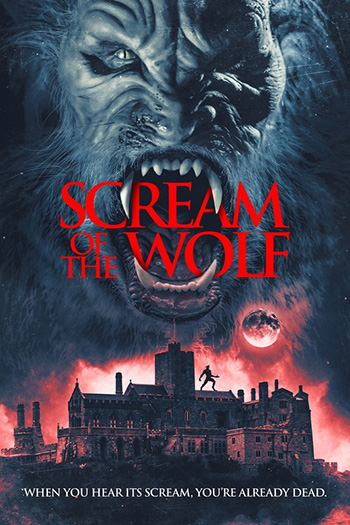
Dan Curtis’s Scream of the Wolf belongs to a cycle of 1970s television horror where the Dark Shadows creator collaborated with the great pulp writer Richard Matheson.
What’s true of all of these works is the modest budget of TV movies were used intelligently and resulted in scripts that encouraged suggestion, compression, and atmosphere.
In this case, Scream of the Wolf was adapted by Matheson from David Case’s story “The Hunter,” and the film is less a conventional werewolf tale than a brooding contest between two men who understand predation too well. It’s almost a full moon neo-Western.
The story begins with animalistic killings in a forested community, each apparently committed by a predator of unusual strength and size. Sheriff Vernon Bell (Philip Carey), unable to identify the animal, seeks help from a retired big-game hunter John Wetherby (Peter Graves). Wetherby now prefers writing and domestic quiet to blood sport, but the killings rekindles his nose for violence.
His investigation brings him back into contact with former hunting partner Byron Douglas (Clint Walker), a formidable outdoorsman who regards Wetherby as a sell-out for abandoning the outdoors, the hunt, the kill.
Sandy Miller (Jo Ann Pflug), Wetherby’s companion, distrusts Douglas and fears the hunt will revive the destructive impulses Wetherby has tried to master. As tracks disappear, witnesses die, and ordinary explanations collapse, the hunt becomes a test of wills.
Curtis directs the attacks with greater invention than the dialogue scenes. Restricted from showing explicit carnage, he uses a quick cutting style that would have been unusual at the time on TV: with abrupt edits and agitated foliage to make the unseen creature feel fast and invasive. The method anticipates Jaws especially with its moody score though it’s nowhere near as effective as that film.
The quieter material is more variable. Matheson’s teleplay circles compelling ideas about masculinity, aging, and the addictive quality of violence, but it too often states them through blunt confrontations. This is very much 1970’s American television where characters simply tell us what they think and what they believe because this is on in the family room and everybody needs to be able to follow it. Most of the time, that’s fine, but I really enjoy some of the ideas under the surface (Matheson is a legend for a reason) and would have liked to see them played out with more refined cinematic technique.
Repetition also burdens the middle section. Characters debate whether the killer is wolf, man, or supernatural hybrid long after the audience has caught up. Curtis and Matheson are not really asking what prowls the woods; they are asking why certain men need something to prowl there.
Graves is really good as Wetherby: a decent man with a troubling gift allowing flashes of excitement to disturb the character’s controlled surface. His restraint suits a man ashamed of how naturally he once killed. He never feels like he’s just recycling Jim Phelps.
Walker has the more colorful role and he knows it. Douglas treats danger as sport and almost seduction. The film’s strongest tension lies in the suggestion that Wetherby is repelled by Douglas because he recognizes a shadow version of himself.
Visually, Scream of the Wolf alternates handsome location work with the flat efficiency of a television schedule. Mist, wooded roads, isolated houses, and open country provide texture. Curtis nevertheless understands how to organize space for suspense.His command of mood is stronger than his command of pacing, and you always have to remember that this was shot with the idea that it would be shown on a 20 inch CRT.
The resolution is the most interesting element. It is as clever in conception as you would expect from a writer with so many Twilight Zones under his belt and consistent with the story’s interest in manipulation, but it feels so jarring and in how quickly it just ends that it takes me out of the picture.
Scream of the Wolf is not among Curtis’s or Matheson’s defining achievements. It is, however, a compact, idiosyncratic thriller with good attack sequences and a memorable adversarial performance from Walker.
It has limitations: repetitive exposition, stilted theatrical composition, and a twist that doesn’t entirely land. But there are some compelling reasons to re-visit it: ominous landscapes, controlled performances, and a surprisingly adult concern with violence as addiction. For admirers of vintage television horror, those qualities make it a flawed but fun romp with a crowd pleasing monster favorite.
To purchase this title click HERE.
This release is one of the thousands of titles available from Movie Zyng, official licensed home of The Warner Archive Collection. A small fraction of each purchase helps support this website.