



































I’d seen Saving Private Ryan (1998) before, many times in fact. I saw it way back in the day on the big screen and countless times after on cable. As an avid movie collector, I bought my own copy on DVD and watched that several times as well. It’s fair to say I am very familiar with this film.
So why in the world did I find myself in a puddle of tears watching it again recently? Why would a scene in a movie, one I knew was coming, affect me in such a profound way? The answer was simple, I hadn’t watched this film since I had my kids.
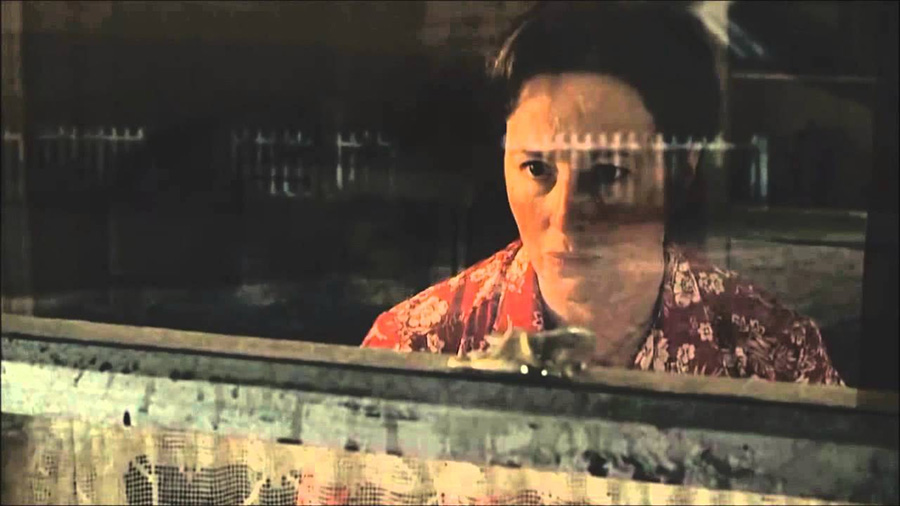
The mother Ryan notification scene was always powerful to me. Mrs. Margaret Ryan is washing dishes and looks up to see an unfamiliar car driving onto the long road leading to her home. She lives in a fairly remote area so the presence of the vehicle is clearly a deliberate action. As an audience we are ahead of her understanding because the conceit of the film had been established in a previous scene. It seems Mrs. Ryan had four sons currently serving in The War, three of whom have been confirmed killed in action.
The car has been sent to inform her in-person of the death of her sons. While Mrs. Ryan knows this from her initial look, she doesn’t truly allow herself to believe it until the priest steps out of the car. At that point she sits down on her porch from the shock. It’s a beautifully brief scene and it’s filmed perfectly without dialogue.
When I first saw this scene in the movie theater, I found it heartbreaking, but managed to keep it together. The little details of the scene including the flag with four stars in her kitchen window, representing a star for every son serving, is also a great touch. But nothing is as impactful as the subtle devastation evoked by Amanda Boxer’s performance as Mrs. Ryan.
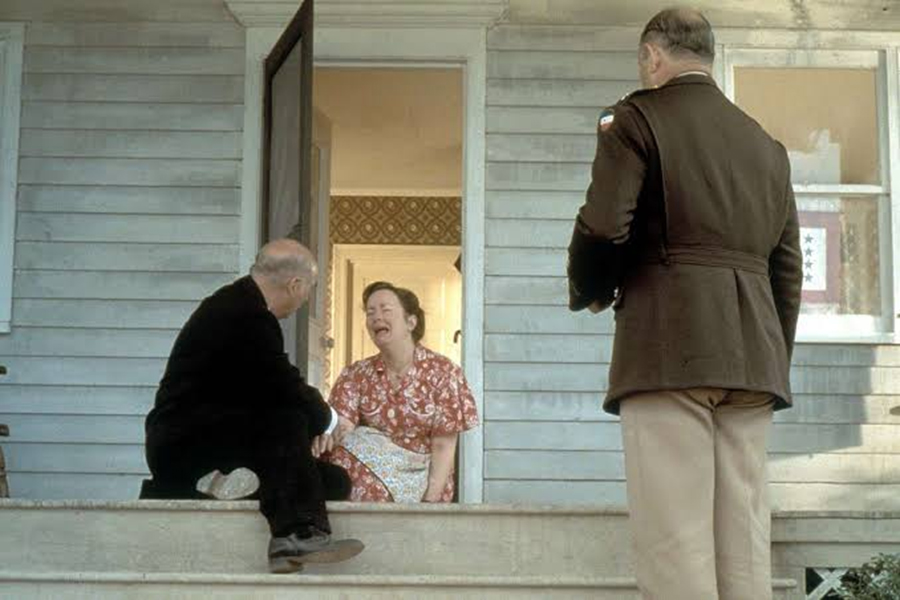
For a movie with so much testosterone and seemingly endless male monologues this speechless female single scene performance nearly steals the show. For a visceral war film filled with violence, sometimes extremely graphic, this scene cuts us down without a single shot fired. With subsequent viewings the emotional impact of this scene naturally lessened as I knew what to expect. But man did that all change this last time I saw it.
Recently both my teenage kids expressed interest in D-Day. They had been learning about it in school and had seen many mentions of the upcoming anniversary. I thought this would be a great opportunity to show them a movie about the subject.
The fact that my own father lied about his age back in 1943 when he was barely fifteen so he could join the fight to take back Europe helped spark their interests as well. The Army took my father before they found out how old he really was and sent him back as a hometown hero. He was even in the local paper pictured with my grandmother beaming. I always thought that story was cool as a kid but knowing what he would have faced had they not discovered his real age often makes me uneasy.
We decided to watch it on June 6th to honor the day itself. I had recently seen the wonderfully acted Brendan Fraser/Andrew Scott drama Pressure earlier that same week. Pressure is about the immediate days preceding June 6th 1944 and the fateful high-level decisions that led to the invasion. Fun fact: Andrew Scott, who turns in a fine performance in Pressure as James Stagg the meteorologist who may have saved the free world with his accurate weather predictions, plays a soldier on the beach in Saving Private Ryan. In addition, I’ve seen several films over the years on the events of that epic day including, The Big Red One (1980), The Longest Day (1962), as well as the Tom Hanks/Steven Spielberg produced HBO series Band of Brothers (2001).
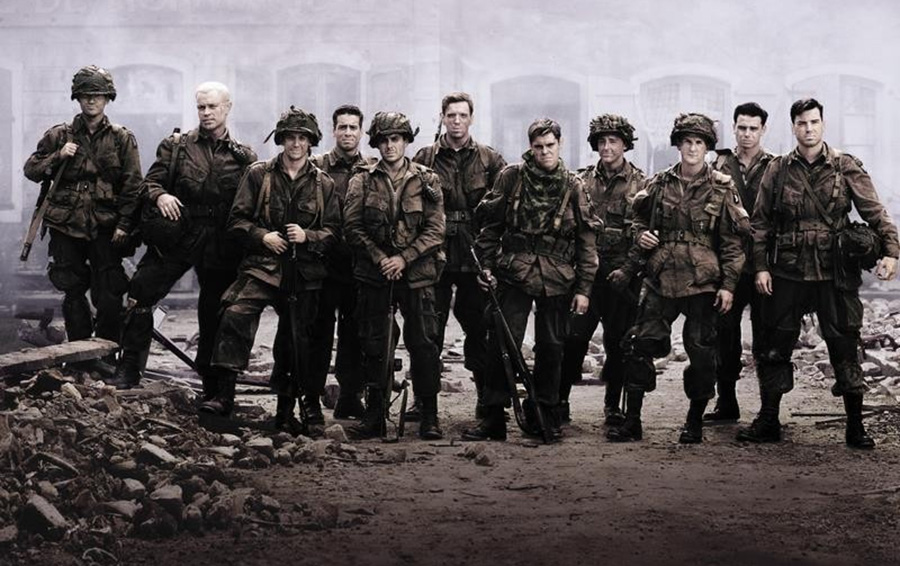
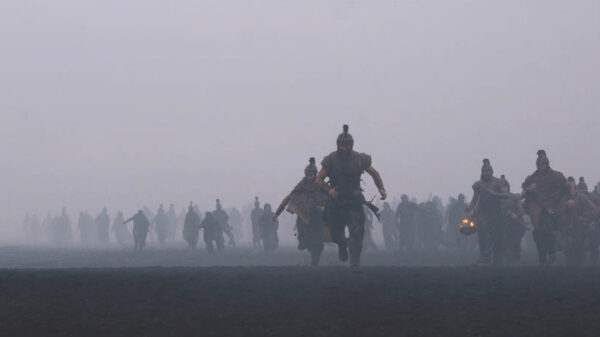
Band of Brothers in many ways picks up where Saving Private Ryan left off, continuing the story all the way to the end of the war in Europe. But despite each film and series, Saving Private Ryan remains in my opinion the gold standard when it comes to the first wave attack at Omaha Beach.
When watching a movie with your kids you often watch two films, the one you know and the one they’re experiencing for the first time. You’re thinking things like, “Did they get that? I remember being confused by that? Are they scared? I was scared at this part.”
Seeing a movie with your kids is watching it through a far different lens for many reasons the most obvious being you’re an older parent. As I watched my kids watching Saving Private Ryan, I could see them stay enthralled throughout the relentless opening scene on Omaha Beach.

I could see them react to the chaos in the moment as Spielberg certainly intended. Neither one of them checked their phones the entire first twenty minutes which is quite frankly a miracle. It’s also a testament the movie still holds up.
There were however some notable generational differences in watching it together, the biggest of which was their reactions to the stars of the movie.
Back when I first saw the film many of the actors were relative unknowns. They had all worked before but none of them, save Tom Hanks and Tom Sizemore were the household names they’d later become. My kids reacted to Vin Diesel far differently than most people first did back then. My kids are now well aware of the 20-year juggernaut Fast and Furious franchise which wasn’t yet a thing back when he first played the ill-fated Italian American Private Caparzo. The same went for Jeremy Davies who played the meek Corporal Upham. Back when I first saw the film, I was excited to see Davies after coming off his controversial incest indie Spanking the Monkey but my kids knew him as the alcoholic father in Black Phone (2024).
My kids immediately picked out Nathan Fillion who went initially unnoticed as the wrong Private Ryan but is now so completely recognizable for his long running TV tenure on everything from Firefly, to Castle, to The Rookie.

Oddly enough the reverse is true when it came to the star powered cameos from the film. When Ted Danson and Dennis Farina popped up in their small parts I remember finding it jarring at the time. They both seemed anachronistic to me and reminded me I was watching a movie. My kids had the opposite reaction. Being younger and unfamiliar with their massive body of work their performances didn’t seem out of place at all, however they did wonder why “Walter White” (Bryan Cranston) had such a small role as the amputee War Department Colonel.

Saving Private Ryan was a massive success for Dreamworks raking in nearly half a billion dollars in worldwide box office and earning Steven Spielberg a much-deserved best director Oscar, his second after winning for Schindler’s List (1993). Although the movie itself would lose the best picture Oscar to Shakespeare in Love (1998), it still remains one of the most successful R-rated and war themed films of all time.
But I’m stalling here. When mother Ryan looked up and saw the approaching car I burst into tears. I thought I could be strong but there was no hiding it. I covered my face with both hands and my whole body shook with grief. Not grief for fictional characters, grief for real parents forced to go through similar horrible notifications.
I thought about my dad and my own kids. I simply can’t imagine it and even allowing myself to do so brought me to an uncontrollable deluge of emotion. My youngest gently put his hand on my shoulders, which honestly helped. I’m too old to go to war but my kids aren’t and the thought they might ever have to is simply too much.
I was told when I became a parent it would change the way I approached writing and it’s true, it did. Years ago, when I was just a kid myself, I was talking about the James Cameron movie Aliens (1986) to a group of people at a theater. I was going on and on about how cool I thought it was and one usher who was a young dad said he couldn’t watch it. “Why?” I asked. I simply couldn’t understand why he wouldn’t want to watch such an awesome movie.
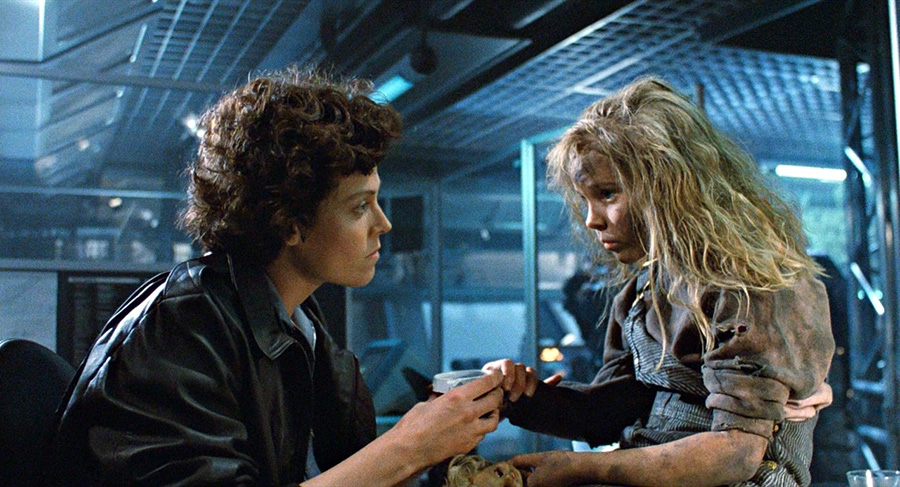
“Because I have a young daughter and I can’t watch a movie where a little girl is in jeopardy like that.” I didn’t understand until we had our own little girl years later. Now I wish I could find that guy and tell him, “I get it, I’m sorry I kept pushing you to see that. I completely understand now.”
I love introducing films to my kids but the older they get the harder it seems to be. There is simply no competing with the small rectangle in their pocket stealing their attention away with 30 second videos and funny trends. I also have to admit just because something meant so much to me at their age it might not mean as much to them. I shouldn’t take it personally. But rediscovering emotion in familiar material has given me a whole new experience.
Crying at a film is a high compliment to not only the filmmaker but to our own personal growth as viewers.
Fred Shahadi is an award-winning filmmaker,
playwright, and television writer living in Los Angeles.