












































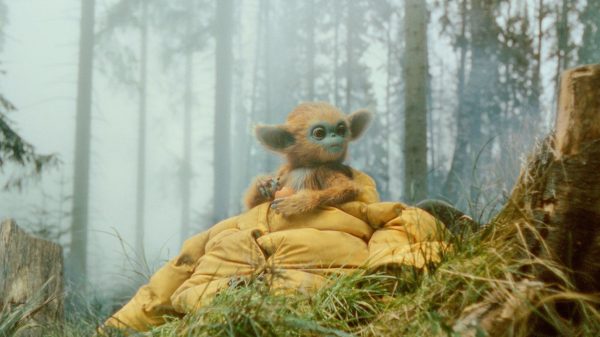


…AND THE DEVICES WERE USUALLY TELEVISION.
Reading Ashley Holt’s lovely recent piece about Oscar Levant, an early role model of mine, and my own reminiscence and appreciation of the work of Richard Condon, led me to recall just how completely at liberty, unattached to my family, so much of my childhood was.
Levant and Condon, unknown to them, of course, and among others, also of course, contributed to my sanity, if not to keep me from getting my smartass kicked more than anyone should deem necessary.
I was an asocial, terrified, and difficult kid, smarter than most, which of course exacerbated my separation from the world at large. Skipping a grade, being assigned to a special class as part of a program called Intellectually Gifted Children was a fucking disaster. I had no social skills, no conversation, no capacity to connect with others on any terms other than my miserably misbegotten own.
The only solace I found was in food, comic books, and television. My only friends were fellow comic book enthusiasts; but I knew, if not intellectually then instinctually, that comics were a passing fancy from which they would sooner rather than later pass, while I remained passionately committed. I occasionally wonder whether any of those kids remember our comic book friendship, or me at all.
That’s how invisible I felt.
And it’s worth pointing out that being on my own as much as I was was far from an anomalous experience in my boyhood. Our parents had survived the Great Depression, the Second World War, and the other less overt but no less anxiety making rafts of shit that were the daily events of the mid twentieth century.
They loved us, sure—well, in my case, not so much, more on that in a paragraph or two—but they didn’t make as big a thing of it as my generation and those after us would do with our offspring. No hovering. No helicoptering. A whiff of Doctor Spock, and a bare whiff, at that.
GOOD LUCK, HAVE FUN, DON’T DIE may be the title of a recent terrific movie, but it pretty much sums up what was expected of the majority of American kids, male and female, urban, suburban, exurban and rural, in the fifties and sixties. Self starting and self amusement was expected of us, universally.
My parents spent the 1950s in what felt like one long screaming match, with me and my two younger brothers watching, not to mention cowering, from under a table. The breaking point came in August of 1960, when the conflict finally moved on from the verbal to the physical. She grabbed me and my brothers and we fled, a Temporary Restraining Order keeping my father at bay.
I never saw him again until the summer of 1994—a sidebar on that in a few paragraphs, too.
We moved, to a neighborhood we couldn’t really afford on welfare checks, helped out financially by my mother’s brother and sisters. Her rage divided us from her from the moment we moved into this new apartment, and my asocial nature shunted me into sullen silence.
And then, a fucking washday miracle. She apparently couldn’t bear the sight of us, so my mother spent most evenings of the next three years out, until all hours of the night. I might add that I never learned until after her death, forty years on, the source of her distaste.
It was revealed to me, like some misbegotten M. Night Shyamalan movie twist, that I and my brothers had three different fathers—and the man I thought was my father was not. I finally came to understand that we reminded her in every way, shape, and form of a lifetime of truly dreadful choices.
That resentment of our very existence kept her distant from us, and she spent an awful lot of evenings out and about, leaving me alone to stay up until those selfsame all hours of the night, babysitting my brothers, and being babysat in turn by late night television.
And, as I’ve pointed out elsewhere, this is where my real education began.
I first became aware of the aforementioned Oscar Levant on the Jack Paar Show. Paar himself was a curiosity, a fussbudget, prone to sniffy offense and prickly resentment. He, and his frequent guests, Jonathan Winters, Genevieve, Alexander King, Peggy Cass, Dodie Goodman and others, seemed, at least to twelve year old me, to have come to Earth from some alien planet.
It might be worth mentioning that from the moment I saw my first television show, on my grandmother’s aircraft carrier sized piece of living room furniture, I was video’s bitch. Daytime TV was my babysitter well before my mother’s night rambling left me to discover its other darker and more complexly challenging side.

And, I have to admit, that Ernie Kovacs’ frankly oddball morning show had already indicated to me that there might be more to television than Captain Video, Roy Rogers and the Mickey Mouse Club.
So I was sufficiently prepared for the physical experience of planting my pajama’ed ass in front of a small glass screen, but what happened in the wee small hours after what I wasn’t aware at the time was called prime time on that piece of electric furniture changed everything.

Jack Paar’s cohort of curious cadre of eccentrics. Steve Allen’s brazen lunacy on the cheap. And the stream of guests who showed up on both shows had me writing down, in my still to this day dreadful handwriting, names to follow up at the library. And I did.
And the movies. All that grainy black and white—even the color pictures, I didn’t own a color television until I lived alone—shocked me with what at the time seemed like secret knowledge revealed to my innocence for the first time.
I had always been a reader, having taught myself to read from comic books—just like the young Lord Greystoke!—but there were authors introduced to me by those talk shows, and as sources for those movies, that transformed an all too typically provincial city boy into, while not necessarily cool or clear eyed, but surely a seeker of wisdom and truth.
Thank you, Frank Loesser, to mention still another bright light introduced to me by late night talk shows.
Only a few years later, marijuana would serve its purpose as a pernicious gateway to twenty five years of drug use, alcoholism, and all around shitty behavior. That said, there was an upside, namely the inversion of that sullenness into the rambunctious fellow I’ve been for ages. But here, in television, was my first and most profound gateway drug, a complex addiction that formed my persona as much as drugs ever did.
Many, most, of my posts here have been raging screeds. That rage remains, and will still be fed, despite the despairing sense of pointlessness inherent in their rage. To be honest, I began to be reminded of Tom Lehrer’s WE’RE THE FOLK SONG ARMY…”Ready, aim, sing…!”
To be further honest, I believe wholehearted we are fucked, and doomed, from so many directions at once as to stymie the most dismissive of skeptics.
But, and so, for at least a little while, I will use this forum to recall and reminisce, to pay tribute to performers, authors, composers, raconteurs and characters who have contributed to the character I have, if not the character I have become.
And for those of you who get worked up about such things, I don’t give a fuck as to whether the work and talent I discuss “holds up,” or has “aged well.” That nonsense is a tangential corollary to the “I need someone to root for” posse, and is in no way my problem.
Trust me on this…and stay tuned.
As ever, I remain,
Howard Victor Chaykin…a Prince.