








































MUBI
Heist movies are Murphy’s Law with a ticking clock. The fun isn’t watching a plan come together but seeing what happens when it collides with reality. It rarely matters whose loot is getting stolen or the reasons why.
Most heist movies are so free of conscience that you could call them amorality tales: their only commandment is, “Don’t fuck up.” Somebody always does.
Writer-director Kelly Reichardt has described her film The Mastermind as an “un-heist” film in the tradition of Bresson’s Pickpocket, where the main character’s motives are as obscure as his plan is moronic.
You don’t have to be a New Wave cineaste to recognize this particular breed of criminal.
Dog Day Afternoon, A Simple Plan, and Fargo’s Jerry Lundegaard (you know, they put that TruCoat on at the factory) are much closer to the reality of crime than anything Danny Ocean ever cooked up: dumbfellas who didn’t think things through.
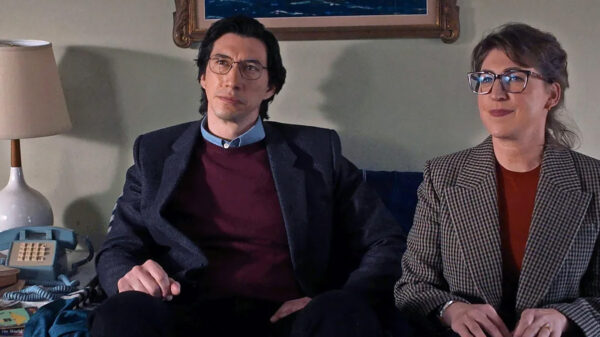
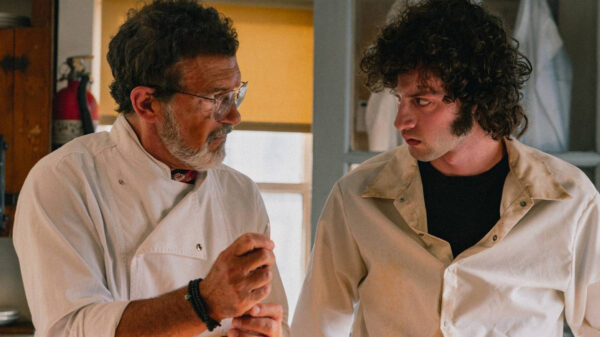
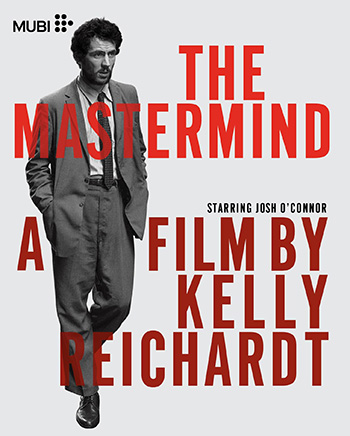
In The Mastermind—the title is absolutely ironic—J.B. (Josh O’Connor) is a 70s-era former art student turned failed carpenter, who cooks up a half-assed plan to heist semi-valuable paintings from the Framingham, Massachusetts Museum of Art. He steals not for wealth or the thrill of the hunt, but because it never occurs to him that he shouldn’t. He’s not some Dostoevsky antihero claiming that society’s petty rules don’t apply to him. He’s just an asshole.
What makes him watchable is that he doesn’t act like an asshole. He may not even know he’s an asshole. He just is.
O’Connor previously played young Prince Charles in The Crown and brings some of that vibe to J.B.
Like Charles, he rarely connects the dots between actions and consequences and is so affectless that at times he barely seems to be in the room. He’s blandly kind to his wife and two sons—but when he’s forced to take the kids along to a meet with his art-theft crew, he just hands his children twenty bucks and turns them loose downtown. His only fatherly advice is not to spend it on junk food.
As the saying goes, no plan ever survives contact with the enemy.
In this case, it barely survives contact with its planners. J.B. and his boys are like a garage band that would rather fart around than rehearse. Guy (Eli Gelb) gets spotted mid-theft by a teenage girl; Ronnie (Javion Allen) forces her to lie underneath a table at gunpoint. Somehow he forgot to tell J.B. he was bringing a gun.
So it’s unsurprising when both of J.B.’s accomplices drop a dime on him.
Ronnie gets caught robbing a bank and rats him out to the cops while Guy tips off the local mobsters, who force J.B. to hand over the paintings (Guy’s pissed when J.B. refuses to give him a ride home afterwards: why’s he gotta be like that?).
J.B. goes on the lam, which is where he stays for most of the film.
We watch him hitchhike from Massachusetts to Ohio, from one phone booth to the next. He tells his wife Terri (Alana Haim) that he misses her more than anything, then asks her to wire him money so he can abandon her and the kids. He calls up old art school buddies to say, wouldn’t it be great to hang out for a few days? And hey, don’t tell anybody I was here. One by one, they get wise to him. One by one, his escape routes are cut off.
It’s worth mentioning that we never leave J.B. for a second (until literally the final scene), and yet we are always observing him from the outside looking at… well, his outside. Reichardt gives him no big revelatory speeches and O’Connor plays him with low-key detachment, so we’re forced to discover him entirely through his actions.
Many of these are subtle tells.
When J.B. sends his wife and kids to stay with their grandparents—he needs them out of the house so he can fence his stolen art—his son locks himself in his room and asks, “Is Dad coming with us?” J.B. flat-out lies. It doesn’t occur to him that he’s taking an emotional hacksaw to his son’s trust in him. He just needs that door opened.
J.B.’s mega-cluelessness puts him on what felons call the pay-no-mind list. He’s not trying to be a badass, he acts like he wouldn’t hurt a fly, so leave him be. If nobody catches him on the run, even with his face on every front page, maybe it’s because he’s just that forgettable.
Meanwhile, every single thing he does leaves the world a worse place. When he sees an old lady and her purse, he just figures, okay, so that’s how he’ll get his bus ticket money. When he wants an address, he rips the whole page out of the phone book.
And yes, I said phone book.
The year is 1970, and The Mastermind plays against the media backdrop of that other great bungled plot, the Vietnam War. The setting works without calling attention to itself. The early 70s was a jaded time. Hippie idealism had burned itself out at Altamont and Spahn Ranch. The war was outlasting the protests. Nobody was obeying the rules, nobody could be trusted, so it makes sense how a guy like J.B. might decide, what the hell, might as well take some paintings.
It was also maybe the last age when people could still hitchhike.
J.B. does, frequently—but you’d get some dirty looks unless you knew how to clean up. Which J.B. also does. We spend five minutes just watching him take a bath and wash his one good shirt so he’ll look just a little less like that guy who’s about to snatch your purse.
This brings us to something that people will either love or hate about The Mastermind: this tip-of-the-iceberg piece has a glacial pace.
The art of quiet attention has not been entirely lost in modern visual storytelling. Steven Zaillian’s Ripley slow-walks us through agonizing sequences of getting rid of a body. Vince Gilligan’s whole brand is built around long, dialogue-free sequences of watching his characters do things: we often have no idea where they’re going till they get there. It’s like watching the snake slither toward you.
But Ripley and Walter White are masterminds. J.B. is winging it. This is no Hitchcockian running man, wriggling out of one dragnet after another. He just keeps moving on. After a while, the long, slow takes of this art criminal start to feel criminally arty. I have now officially spent more time watching Josh O’Connor hide a crate of abstract paintings in a barn loft than I have ever spent looking at abstract art.
This is not to say that J.B. lacks cunning.
When the cops are ready to haul him in, he casually mentions that his dad is a judge. No matter how many times he’s failed to pay his mother back, he swears that this time, no lie, he’s onto something big. When he hides out with two friends from art college, one of them (Gaby Hoffmann) figures out that J.B. was planning to use their former art mentor as a fence. She doesn’t send him on his way because he’s a fugitive. She kicks him out because she sees that all J.B. ever knew about friends is how to use them.
This tracks with the mindset of your average art thief more than popular culture would have us believe. Ever since The Thomas Crown Affair, they’ve been treated as the aristocrats of the criminal fraternity—aesthetes who are above petit-bourgeois morality and steal for the fun of it all.
Reichardt comes closer to the truth: real art theft is a blue-collar trade.
Most of them don’t know any more about the paintings than their catalog price, and care less about damage than you’d expect. Rembrandt’s A Lady and Gentleman in Black was hacked out of its frame and rolled up like a gyro. The Mona Lisa spent two years in a trunk in some guy’s apartment.
The Mastermind is not a masterpiece. Like Nomadland and Die My Love, it’s the kind of festival film where the affairs of remote and distant people slowly unraveling in remote and distant places are treated as profound because they cannot articulate their madness and the only sounds are gritty wind on the highway, the idling motor of an old Dodge, and a lonely guitar.
Time was that when the camera held on a wooden crate for a minute and a half you’d think, oh, that shit’s gonna blow up any second. Now we stare at that crate and I guess we’re supposed to think, that’s me. My whole life. In a box in a hayloft. Waiting.
It’s probably no accident that the paintings J.B. steals are the work of Arthur Dove, widely considered to be the first American abstract painter. The nature of abstraction is alienation: from representation, from emotion, from meaning. The Mastermind is not an abstract movie. But it is alienated.
There are movies where you think and movies where you feel.
Very rarely, a film does both. But I have yet to find a movie that could make me think my way into feeling something. The feelings only come through when your critical brain gives up trying to answer questions like “Why are we watching a shirt sway on a coathanger?” Moments like this frame your brain into believing that if you are intensely focused on a thing, then that thing must carry some meaning. Sometimes a 70s shirt is just a 70s shirt.
Once I stopped trying to think about The Mastermind as a Very Important and Significant Movie, the emotions whistled in like von Trapp children. The most powerful and abiding emotion was annoyance.
There were a lot of J.B.s in the 70s.
There are probably just as many now, but these days we have names for them: we’ve seen the TikTok videos about 10 signs of a sociopath and talking back to gaslighters. J.B. gets away with his shit because he’s quieter than most people who pull you into their madness. He talks like a nice person is supposed to sound. He is what folks in the 70s called mellow.
We are fortunately past the myth of believing that the protagonist must be likable.
But liking someone has nothing to do with caring about them, and I just didn’t care what happened to J.B. I was interested. I got curious. I felt sorry for his family. A few times I laughed at his baldfaced audacity. But I couldn’t want anything from him or for him because he wasn’t asking for anything or giving anything back. Whatever might be going on inside of him, I was locked out on the other side. I’m not sure that the character has an inside. That may be the point.
The lone extra is a video essay.
If a movie’s going to deal with art, it’d better have some. The Mastermind has plenty of art. And it is also about theft, and it stole two hours of my life. For a movie lover, that’s the worst crime of all.