











































Warner Bros.
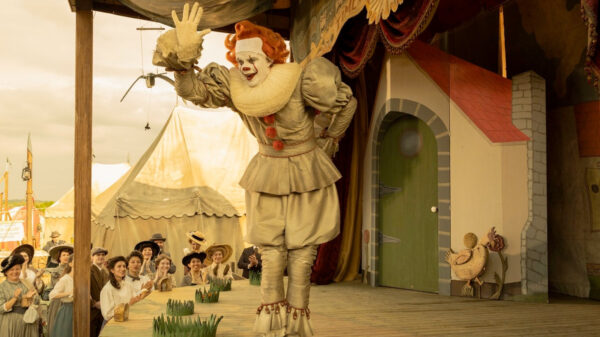
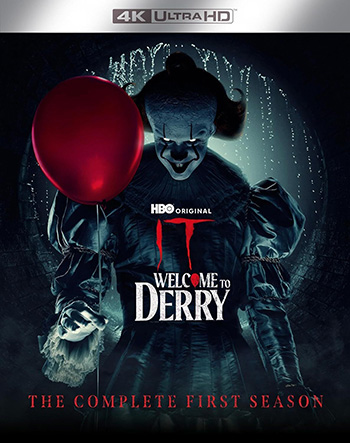
The first in a trilogy of anthologized seasons, Andy Muschietti returns to Derry to further explore the misdeeds of the entity terrorizing the town in, primarily, the guise of Pennywise the Dancing Clown (Bill Skarsgård).
Following It’s feeding cycle, we travel 27 years back in time from the Muschietti films that were set in 1989 and 2016 respectively, meaning the series is set in 1962, where we are introduced to the precursors to the Losers Club we all know and love from the various adaptations of Stephen King’s novel.
Much like the band of proudly self-professed Losers of the miniseries and duo of movies, the kids are once again the frontrunners in figuring out what is haunting them and their peers.
Something that has always been integral to the success of an adaptation of It is how the kids terrorized by the entity are portrayed with both the 1990 miniseries and the Muschietti films being stronger in their former portion featuring the younger cast, albeit the latter parts falling flat is also partially due to King’s lifelong reputation for being unable to write sufficiently satisfying endings.
With It: Welcome to Derry, Muschietti and his co-directors once again manage to create a band of misfits compellingly portrayed by a young cast, just as further narrative interest is present thanks to the addition of the different type of horror the adult denizens of Derry experience as there is, after all, something utterly rotten festering in every corner of this fictional Maine town.
As for Pennywise, fans of the Swedish actor’s impressive interpretation of the character must arm themselves with patience, as Muschietti & Co. have wisely decidedly to favor character development and worldbuilding as the core of the series, but all good things come to those who wait, and the gradual teasing of Pennywise before he bursts to the forefront in the latter half of the series works exceedingly well, and emphasizes how the stakes continue to elevate to heartbreaking levels as the entity’s powers grow.
From the very first moments of the series, Muschietti lets the viewer know that he will not be pulling any punches with the horror, which goes for both how gory this show gets, just as he is not afraid to lean into the more absurd horror elements King has had a tendency to utilize throughout his career, which may at times be too unhinged for some, but the commitment to bring something unusual to the table is commendable, and the show as a whole does not cut corners with the amount of nightmare scenarios it brings to life, just as the season finale is a significant improvement over other It showdowns in previous iterations.
Visually, It: Welcome to Derry is pleasant to look at thanks to its vibrant color palette, creating warm visuals conveying the soothing haze of the halcyon summer days of childhood, which in turn serves as an increasingly unnerving juxtaposition to the equally vibrant, blood-drenched horrors that continue to escalate in intensity and scale, underlining how quickly a dream can become a nightmare.
By no means riding the coattails of the largely successful Muschietti films, It: Welcome to Derry brings plenty of energy and creativity to the continued expansion of King’s infamous tale of terror, making it not only a worthwhile watch as a series in its own right, but also a meaningful addition to the line of adaptations of one of the most iconic sources of nightmares in modern pop culture history.
Extras include Inside Derry behind-the-scenes for each episode, and several featurettes.
Verdict: 8 out of 10.





You must be logged in to post a comment Login