
































Metro-Goldwyn-Mayer
Deep inside of Billy Crystal, a mid-century Borscht Belt comedian has always been struggling to get out.
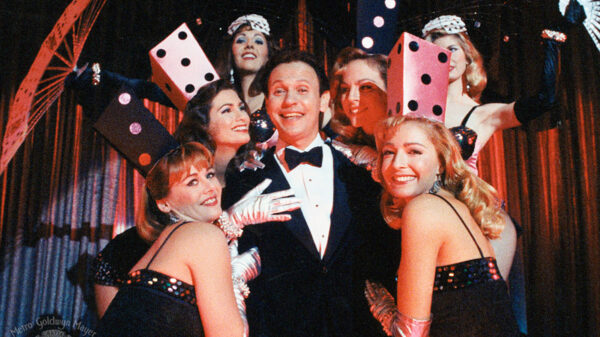
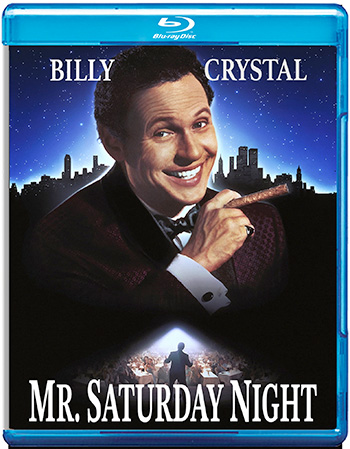
In 1992—thirty years after that era of comedy started to die—Billy finally got to unleash him with his directorial debut, Mr. Saturday Night.
Unfortunately, the routine bombed.
We’ve heard Crystal do that voice many times: one-liners machine-gunned in a Brooklyn accent, willing-to-be-an-asshole barbs sold with a grin, the faint aroma of chicken fat.
We hear echoes of it in This is Spinal Tap (“C’mon, mime is money”), entire dialogue runs in When Harry Met Sally (“I would be pleased to partake of your paprikash”), and the joyful lunacy that is Miracle Max in The Princess Bride (“I’m in the goon squad”—“You are the goon squad.”).
Maybe it’s no accident that he did all that schtick in Rob Reiner films. If you can make Carl Reiner’s son laugh, you’ll knock ‘em dead at Grossinger’s.
But that inner Catskills comedian would not be contained. He insisted on top billing. During his brief stint on Saturday Night Live, Crystal gave birth to a new character—in some ways an alter ego—named Buddy Young, Jr.
Buddy Young walked a fine line between homage and parody. He didn’t crap on the audience like Andy Kaufman’s Tony Clifton, but he had an edge. His act was mainly what modern comics call crowd work, except that Buddy didn’t wait to be heckled. He’d find the one guy in the room who wasn’t laughing and humiliate him. Sometimes the poor sap would even beg for more.
The SNL-era Buddy Young routines were weirdly meta. They asked us not simply to recall what 1950s comics were like, but to cast ourselves in the role of a 1950s audience: the kind that could laugh along with Yiddish patter songs, mother-in-law jokes, and occasional forays into working blue.
Mainly, Buddy Young was a way for Crystal to work without a net. After roasting Johnny Cash during a Weekend Update segment, he bragged that “it just came to me.” Letting people know that he can be funny on cue is an obsession of Crystal’s. When Jack Palance did one-armed pushups during the 1991 Academy Awards, emcee Crystal riffed a series of jokes about it, topping one with: “I just made that one up!” (not entirely: Bruce Vilanch was busy feeding him lines from the wings). That same line appears almost verbatim in Mr. Saturday Night. We get it, Billy. You can ad-lib.
After When Harry Met Sally made Crystal a romantic lead and City Slickers proved he could open a movie, Columbia Pictures decided it was Buddy Young’s time. And so Crystal teamed up with the hottest comedy writing duo of the time, Lowell Ganz and Babaloo Mandel, to bring Mr. Saturday Night to the screen.
Crystal is clearly in love with Buddy Young, Jr., and Mr. Saturday Night takes for granted that we must feel the same. Thus the script wrong-foots itself from the first scene by revealing Buddy as a complete tool. He treats his brother Stan (David Paymer) like a servant, blaming him for booking the great Buddy Young at a nursing home where the audience is literally falling asleep on him.
Stan—therapist, manager, and punching bag—wants to retire. He’s tired. Buddy plays the abandoned, you-owe-me card. This is a bad ploy for audience sympathy, considering that David Paymer is basically a human puppy in heavy-rimmed glasses.
It is also not a good sign that we watch him do this in old-age makeup that stills Crystal’s ever-active eyebrows and makes him look like a boiled potato in a toupée.
Cheesy age makeup was de rigeur in movies of the era—where would the Back to the Future movies have been without a wrinkly Biff Tannen?—but this is not a framing device. We are going to spend nearly the entire movie with old Buddy Young, with only occasional flashbacks to Billy Crystal looking his actual age. And old Buddy Young is—frankly—kind of a self-absorbed dick.
To be fair, young Buddy Young is also a self-absorbed dick, but at least he’s enough of a livewire for most people to write off his childishness as high-strung genius. Just before a live broadcast—where he’s the “Mr. Saturday Night” of the title—he kisses his wife Elaine (Julie Warner) and daughter Susan backstage, then goes in front of the TV cameras and belts out one-liners about his nagging wife and idiot daughter.
Young Susan doesn’t get the joke. How can Daddy can be nice to her in private and then make fun of her on TV? Elaine tells her it’s just show business, but it’s really not. Buddy is going to spend much of the movie taking jabs at Susan (Mary Mara in present-day scenes) or anyone else who tries to get close to him, and he doesn’t always bother to pretend he’s joking.
Crystal swears that Buddy Young, Jr. isn’t based on any comedian in particular (Ganz and Mandel say he’s a composite of eight or nine) but there are little hints here and there. His favorite prop is George Burns’s perpetually unlit cigar. The Buddy Young Show has echoes of Uncle Milty (Berle also treated his brother like a whipped dog). My own encounter with Shecky Greene—a brief and not very amusing story—told me more than I ever wanted to know about the self-loathing that fueled many a Vegas comic. And of course, Young is nakedly stealing Don Rickles’s act.
But there’s one moment in the film that’s unmistakably lifted from real life. That’s the night when young Buddy, frustrated that he’s airing against Disney’s mega-popular Davy Crockett, tries to get even during his monologue by implying that Crockett and all those dead heroes at the Alamo were gay.
This is a nod to the night that comedian Jackie Mason also short-circuited a promising career on live TV. President Johnson was about to break in with a speech and Ed Sullivan waved his fingers off-camera for Mason to cut his act short. Mason had worked hard for that slot and wasn’t leaving without a fight, so he said, “here’s a finger for you” and (according to some, including Ed Sullivan) flashed his middle one at America’s most beloved variety-show host.
It wasn’t the end for Jackie Mason—after a thirty-year exile, he got to star in Caddyshack II—but when The Buddy Young Show gets cancelled, Buddy crawls away. He later has the misfortune of following The Beatles after their first Ed Sullivan appearance, and that’s all the proof Buddy needs that the world hates him.
Say goodbye to the flashback scenes, because we’re not going back. The rest of the movie is old, bitter Buddy Young.
When Crystal pitched Mr. Saturday Night to William Goldman during the making of The Princess Bride, Goldman called it “Raging Bull meets Willy Loman.” Too bad Goldman didn’t write that script: a little man who can’t leave the stage because he doesn’t exist without an audience, and now the audience is gone. That might have been a film to watch.
But Ganz and Mandel were known for “heart.” Their instinct isn’t to embrace the self-immolation of Buddy Young but to throw him emotional lifelines. That’s how we get Helen Hunt as a talent agent who believes she can reignite Young’s career.
Which is ironic, considering just how wasted Hunt’s considerable talent is in Mr. Saturday Night. When she deus-ex-machinas at Buddy’s doorstep to tell him, “my clients get work,” we believe her, even though he’s given her absolutely no reason to believe in him. Crystal does not return the serve. Like many comedians, he’s not made for vulnerability. When he doesn’t have a joke at hand, he goes numb.
Or maybe he was feeling everything and the twelve layers of latex covered it up.
When Crystal does have a joke—as many as Ganz and Mandel can deliver—he’s hilarious in a very specific way, and it’s as close to brilliance as the movie gets. At his mother’s funeral, he’s briefly verklempt. She was his first audience, his first laugh, and he can’t let himself feel that loss. So instead he makes his dead mother the butt of insult jokes at her own funeral. For Buddy, laughter is pain clawing its way out.
Crystal’s other great comic riff takes place at a restaurant meeting with a famous director (Ron Silver, oily confidence all the way). Turns out the director is not only a huge Buddy Young fan (having been personally insulted by Young as a child), but actually based a character in his latest movie on Young and even named him “Buddy.” A second chance is literally being served up to Buddy like the bread bowl the waiter puts in front of him.
In what must have been a tribute to Chaplin’s famous potato-roll dance in The Gold Rush, Buddy turns the bread into prop humor. He presses a crusty bun to his nose for a Karl Malden impression. Two buns and he’s doing Princess Leia’s hairdo. A French roll is fodder for schlong jokes. Silver is cracking up. Now all Buddy has to do is prove he can read lines and really act.
What makes this scene play is that Buddy is only likable when he’s making us laugh, and all his humor is born of terror. He has to make this audition work, just like he had to get through his mother’s funeral. But the real genius of the restaurant scene is that the jokes are just shy of being genuinely funny. Even in 1992, Star Wars riffs and Karl Malden impressions were not exactly ripped from the Zeitgeist. We find ourselves wanting Buddy to be funny, which is not where most comics want you.
It’s been three decades since Mr. Saturday Night’s release, so it’s no spoiler to say that Buddy blows his last, best shot at fame. We’re meant to see this as a kind of triumph: letting go of the dream means he can finally face the reality of his life.
This was kind of a go-to ending in 90s movies where age is on the menu. Mr. Holland’s Opus is about a man who realizes he’s never going to be a great musician and becomes a great teacher instead. Mr. Baseball stars Tom Selleck as an aging ballplayer who finally accepts that he’ll never be a legend and gratefully takes his place on the team. Long before that, we had Mr. Deeds Goes to Town and Mr. Smith Goes to Washington. Putting “Mr.” in the title seems to be Hollywood shorthand for “learn to live with disappointment.”
Buddy Young did get a second chance in 2022 when Mr. Saturday Night became a Broadway musical. It earned Tony nominations and Billy Crystal was finally the same age as his character (and yet still requiring age makeup, go figure). Apparently the book by Crystal, Ganz, and Mandel strives to make Young just a bit more likable.
But likability isn’t Buddy Young’s problem. Masterpieces like Lenny and The King of Comedy proved we can handle comedians who aren’t nice or funny. The problem is that Mr. Saturday Night wants us to love Buddy in spite of his cruelty and self-pity and, frankly, for giving up too easily.
Like a Norma Desmond in baggy pants, we’re told that Young’s curse is age. The world has changed too much in thirty years. His style of humor doesn’t play. But time has changed how we see the passage of time. Kate Winslet is the same age as Norma (fifty), and three decades after Titanic she’s doing just fine.
Crystal said that Buddy Young was inspired by the slump his career hit after the cancellation of Soap. But Crystal was 41 when he made When Harry Met Sally, 51 when he re-energized his career with Analyze This, and just about Buddy Young’s age—76—when he earned raves in 2024 for his role in Apple TV+’s Before. Clearly, age has not cast him aside.
So it’s possible that the reason Mr. Saturday Night isn’t funny enough or moving enough is that it simply isn’t true enough. Age may not be the enemy. Often, it’s a burden, in some ways it’s liberation, and too often it’s simply the excuse. The strongest counterargument to Buddy Young, Jr. may be Billy Crystal himself.
To purchase this title click HERE.
This release is one of the thousands of titles available from Movie Zyng, official licensed home of The Warner Archive Collection. A small fraction of each purchase helps support this website.