

















































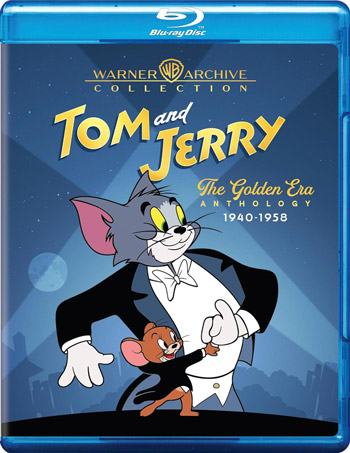
The Tom and Jerry Golden Age Era Anthology from Warner Archive isn’t just another cartoon box set—it’s one of the most important releases ever made for classic animation on home video.
This Blu-ray collection celebrates the peak years of William Hanna and Joseph Barbera’s legendary partnership, preserving 152 theatrical shorts produced between 1940 and 1967.
Seen here in high definition, these cartoons look better than they ever have, revealing details and textures that were lost for decades to fuzzy TV broadcasts and worn-out prints.
What really sets this set apart is how thorough and lovingly restored it is.
Warner Archive went back to original Technicolor negatives and elements wherever possible, and the results are stunning.
Colors are richer, lines are sharper, and the lush MGM backgrounds finally get the attention they deserve. You can see individual brushstrokes in the painted scenery, subtle expressions in Tom’s face as he plots his next move, and the fluid motion blur that gives Jerry’s escapes their manic energy. It’s a reminder of just how much care and craftsmanship went into every single frame.
The historical weight of this collection is enormous. Included are seven Academy Award–winning shorts, a testament to how dominant Tom and Jerry once were in theatrical animation. The Yankee Doodle Mouse (1943) earned the duo their first Oscar, turning household objects into wartime weaponry in a wildly inventive showdown. Mouse Trouble (1944) perfects the “instruction manual” gag, with Tom following increasingly terrible advice on how to catch a mouse. Quiet Please! (1945) introduces Spike the bulldog and builds an entire cartoon around the comic tension of keeping him from waking up.
Then there’s The Cat Concerto (1946), arguably the crown jewel of the series. Tom’s performance of Liszt’s “Hungarian Rhapsody No. 2,” constantly sabotaged by Jerry living inside the piano, is a flawless fusion of slapstick and classical music. Later winners like The Little Orphan (1948), The Two Mouseketeers (1951), and Johann Mouse (1952) show just how versatile the series could be, dropping the characters into everything from Thanksgiving feasts to swashbuckling adventures to Viennese waltzes.
The Oscar winners may get top billing, but the rest of the set is just as essential. Early shorts like Puss Gets the Boot (1940) and The Midnight Snack (1941) already show the formula working beautifully. Mid-period classics such as Saturday Evening Puss (1950) capture the series at full throttle, with jazzy party scenes that practically swing off the screen. Later entries like The Flying Cat (1952) and Designs on Jerry (1955) push the chase into increasingly elaborate and absurd territory. Even the often-debated CinemaScope cartoons from the later years are included, warts and all, offering a complete picture of how the series evolved.
Crucially, these shorts are presented uncut and uncensored. That means restored footage long missing from TV airings, along with some culturally dated material that Warner Archive chooses to contextualize rather than erase. Leonard Maltin’s introduction helps frame this approach, acknowledging the problematic elements while emphasizing the importance of historical preservation. It’s a smart, respectful way to handle classic material that reflects its time.
The audio restoration is just as impressive. Scott Bradley’s scores—some of the most sophisticated music ever written for animation—finally get room to breathe. Classical passages, jazz riffs, and original themes all hit with new clarity, perfectly synchronized to every crash, squeak, and yowl. The MGM studio orchestra sounds fantastic, and the upgraded audio adds extra punch to every gag.
Special features round out the set nicely, with vintage behind-the-scenes material, commentaries from animation historians like Jerry Beck, and documentaries exploring the Hanna-Barbera partnership. These extras deepen appreciation for the artistry and working conditions behind the cartoons, turning the collection into both entertainment and a mini film school for classic animation.
For longtime fans, animation buffs, or anyone who grew up watching these shorts in less-than-ideal conditions, this anthology is the definitive way to experience Tom and Jerry. It preserves them for future generations while revealing just how beautiful and meticulously crafted they always were.
This was an era when theatrical cartoons had serious budgets, large teams of artists, and an expectation of excellence equal to any Hollywood feature. Every chase, every gag, and every absurdly elaborate scheme is here in its best possible form.
It’s not just nostalgia—it’s a rediscovery of one of animation’s greatest achievements, lovingly restored and presented exactly as it should be.
Highest recommendation.



You must be logged in to post a comment Login