
























Recently, a very kind fellow posted a piece about my work that was incredibly flattering, and, as in all things, despite the cliched banality, no good deed went unpunished.
Understand, just between us, I agreed with just about everything he said.
My modesty is situational; which is to say, I know when what I’ve done has value, and I’m equally aware when I should’ve stood in bed, if you catch my drift. In this case, his take on what he held in high regard in my creative output was a pretty good match for my own self satisfied pride of effort.
The replies to the post hit all the anticipated notes. Nothing particularly insulting, to be clear. Most ignored the conditions and qualifications the poster had indicated, of course—almost nobody bothers to actually read whatever they have an opinion about to broadcast nowadays—but it didn’t take long before the trope that has been a horse collar for me since the early 1980s made itself known.
To be fair, the reply reminding us all of this point wasn’t delivered in that unfortunate “gotcha” tone so beloved of those convinced they’ve discovered the Pharoah’s tomb, somehow unearthed an inconvenient truth, or unmasked Batman, and are entitled, to what I would guess, to be a No Prize.
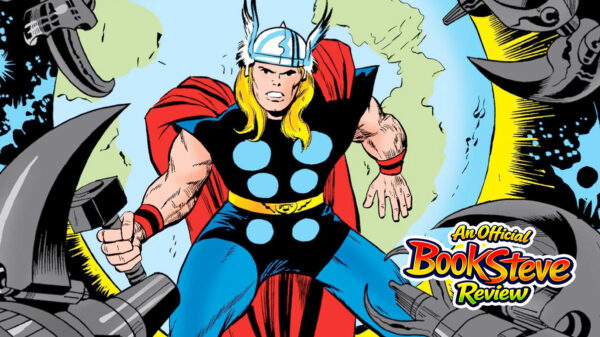
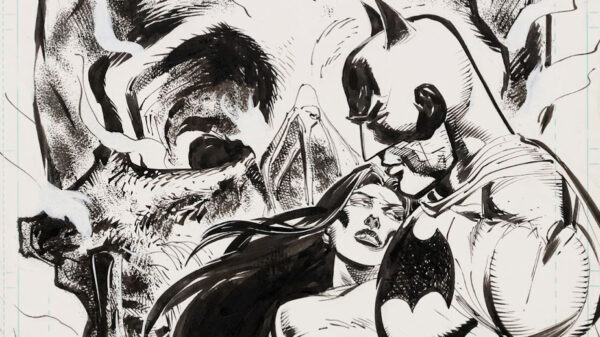
Somebody pointed out, as someone always will, that all my heroes look alike.
You got me.
As if, you know, it were an accident. Or that I had somehow not noticed. Or perhaps an attempt by yours truly, the wisenheimer, to put one—one what, I’m not entirely sure—over on an unsuspecting comics enthusiast, of which I have a following of far too few.
Speaking as I was of situational modesty…
So, no. Not an accident. Not a con job. Rather, the reason all my character leads—I hesitate to use the word “Hero” for a number of reasons familiar, I would hope, to those enthusiasts mentioned above—look alike is the result of what started out as a limitation of skillset, and became codified, an aspect of the brand, if you will, by deliberate choice.
In the first place, I have to work really hard to be any good. It don’t come any easier for me than it did for Ringo Starr. Once I found something I could do acceptably well, and was able to repeat it—because, after all, continuity is what comics are fundamentally about—I stayed with and polished it.
And in regard to the avatar/branding, element, when I was a kid, my heroes were the Monogram and Republic cowboy stars that ran endlessly on midday 1950’s television. When I got a bit older, it was all about Errol Flynn, and all that swashbuckling.
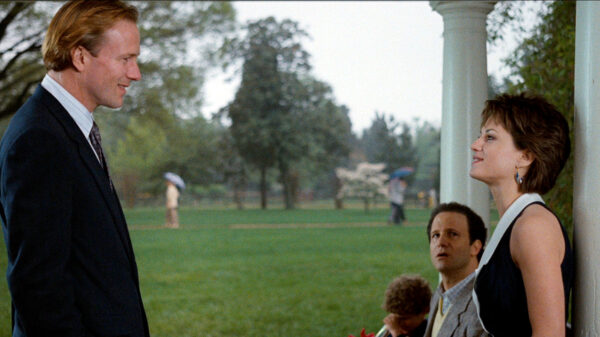
And then I discovered the three Hollywood stars, who would represent, facially and physically, the values I held dear as a mid century American man. These three were Henry Fonda, William Holden, and most specifically James Garner. As far as I have come to know, Garner was a profoundly decent fellow, Holden was a difficult and self destructive alcoholic, and Fonda, for all his charm on screen, was a chilly and distant man off camera.
All this notwithstanding, they were extraordinary screen presences, often presenting the various shades and colors of what it meant to me to be a man, an American man, for good or ill, in the mid twentieth century, through the scrim of popular entertainment. To be specific, all three of these guys were able to embody a broad spectrum of character and performance throughout their careers.
When I was welcomed back to comic books by the offer from FIRST COMICS to create a new series, an offer that quite literally transformed my life, personally, financially and professionally, whether by instinct, intuition or thoughtful consideration I have no recollection, I thought of those three men.
The protagonist of that comic book is named REUBEN FLAGG. This name is not a casual toss off. I named him Reuben for naivete, and Flagg for patriotism. I modeled his look on an amalgam of those three men, representing, as they did for me, the sort of Americanism that I admired, and had come to find vanishing on the cultural landscape.
And that’s where it all started—and has proceeded for over four decades. An avatar, a short cut, if you will, a casting choice.
To digress once more, I am a cartoonist. Now, to a civilian, that means a person who draws cartoons. But in the specific lexicon of the little marginal ghetto of the entertainment industrial complex which I call home, a cartoonist is a comic book professional who both draws and writes his material.
The great newspaper strips were frequently, but not always, the work of one talent. Milton Caniff, Harold Gray, Chester Gould, Al Capp are among that esteemed crew. In the realm of comic books, I am a reasonably rare bird.
The reasons are simple. Many if not most of the mainstream comic book writers of my generation were failed artists. The modern comics writer of the generations following isn’t necessarily of that ilk, as comics are now justifiably identified as a rung on the ladder to a potential career in more profitable media. So these people can’t draw, and never failed at it in the first place, and need an artist to complete their work.
As for artists, an unfortunate majority are incapable of creating cohesive coherent visual narrative, let alone text to accompany it. Years ago, an industry hack writer would often ask his collaborators what they felt like drawing. Comics may be frivolous, but they deserve more serious attention than that. Add to this the decline of reading as a pastime and you have a perfect stew of textual and narrative subliteracy and illiteracy.
So, people like me are thin on the ground in the comic book business; certainly those as good at their jobs as I am at mine is a tiny minority. The reasons for this are simple. Beyond the basic fact of being skilled in two disciplines, the time and deadline factor create a permanent hell.
That said, to be clear, with a few notable exceptions, the majority of the work I’ve done since the early 1980s has been material I’ve packaged, script and art, start to finish.
And yes, all the main characters have looked pretty much alike. Dark hair, dark eyes, left handed, and representing, in the celebrated terms immortalized by Neil Simon, “Think Yiddish, go British,” implicitly Members of the Tribe.
That American face, an amalgam synergism of Fonda, Holden and Garner has been the avatar, the brand of my work for nearly a half century.
And now, for the typically buried lede.
Yes, they all look alike. But then, so does an actor who plays a number of parts. And that’s where, at least for me, it gets interesting. While all my leading characters look alike, they are all very different characters—because, while I deploy an avatar—okay, a shortcut—for the visuals, I write a different character for every character I’ve created.
Reuben Flagg, Max Glory, Cass Pollack, Dominic Fortune, Joel Breakstone, Marc LaFarge, and all the rest. Different roles, different characters, portrayed by the same avatar/actor. Different speech patterns. Different backstories. Different narratives. Different narrative arcs.
As a pal pointed out, clarifying a point I couldn’t yet make, reversing the above polarity to my delight, “They all look alike but they’d all be played by vastly different actors in each movie.”
So, self serving bullshit, or an honest self appraisal? You get to choose—but please, keep your choice to yourself. What you think of me is none of my fucking business.
And, of course, if the fact that all my protagonists look alike is your only, or even primary takeaway in regard to my work and my career, you’re more than welcome to all the SUPERLASERDEMONSPACEDRAGON-MUTANTMONSTER bullshit that the one trick ponies of mainstream comics have been feeding you to your apparent satisfaction for decades.
Trust me on this.
As ever, I remain,
Howard Victor Chaykin…a Prince.