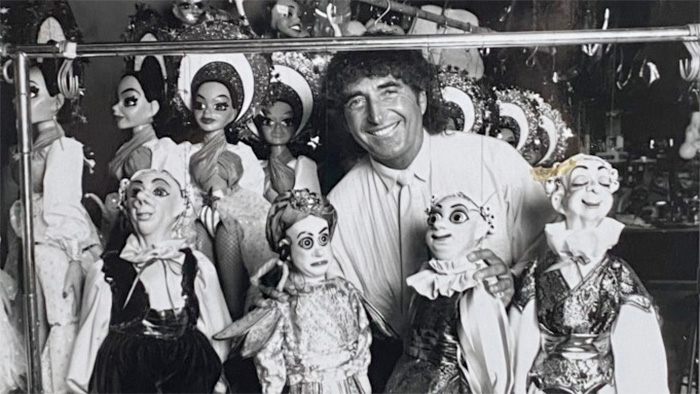




































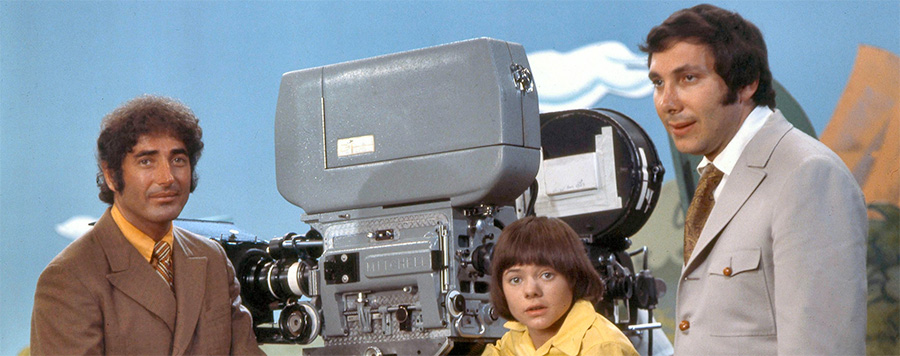
(Sid Krofft, actor Jack Wild, and Marty Krofft, 1969)
Krofft is not a person but an era. Although Sid Krofft’s life ended on April 10, 2026 (his younger brother Marty having died some two and a half years before him), and even though his brilliant career as a puppeteer began not on Saturday morning TV but the Vaudeville stage, for any child of the 1970s that word Krofft is a time-portal back to a shag carpet, inches away from the blurry color RCA with a bowlful of King Vitaman in hand, watching The Bugaloos or Sigmund and the Sea Monsters—or, more likely, the Citizen Kane of trippy kid shows, H.R. Pufnstuf.
His birth name was Cyrus Yolas. If he was eager to change it, you might expect him to pick something more conventional (supposedly his agent chose the name and Sid added the extra f). But there was nothing conventional about Sid Krofft.
He was still in his early teens when he started performing for Ringling Bros. Circus. At 28 he was opening for Judy Garland at the Las Vegas Flamingo (one of his Pufnstuf creations, Judy the Frog, was an affectionate if odd tribute to her).
His stints with Judy (and later Liberace, Sinatra, and Cyd Charisse) were definitely not for kids. He crafted sexy marionettes that could do Rockettes-style kick lines, smoke cigarettes, and striptease. But they already showed the inventiveness—not to mention the outright wackadoo—that would later inspire the denizens of Lidsville and Living Island.
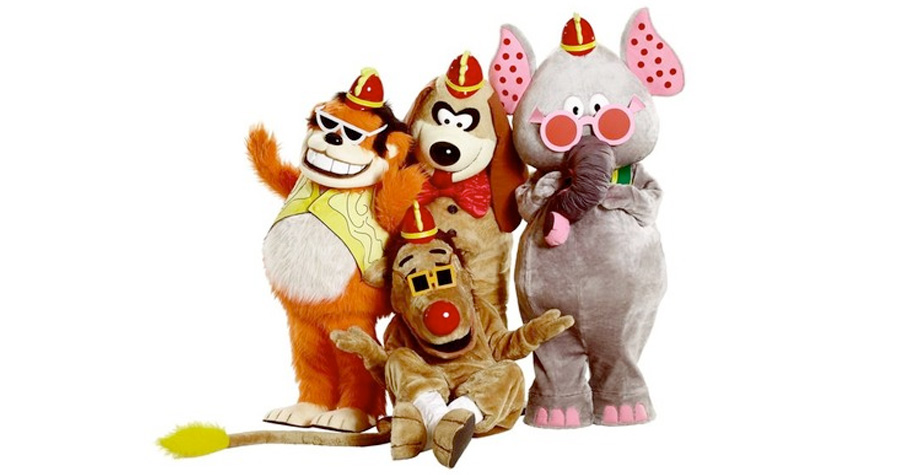
Many sources date the start of Sid and Marty Krofft to their costume designs for Hanna-Barbera’s The Banana Splits. But it’s more complicated than that. From topless puppets to Fleagle and Drooper is not an easy career pivot, and there were a few steps in between.
 The first Krofft Enterprises success was their risqué traveling stage show Les Poupées de Paris, which involved outright full-frontal puppetry. Billy Graham complained that “the women don’t wear bras,” failing to mention that the naked breasts were made of stuffed felt.
The Kroffts were making bank but it wasn’t enough. Sid wanted to go large, and marionettes just aren’t made for arenas. He finally got his chance at HemisFair ’68, a world expo where Krofft had two separate stage shows running simultaneously. The one for the daddies and mommies was the still-popular Poupées de Paris. Over in the Coca-Cola Pavilion was the kid-friendly Kaleidoscope.
From the surviving evidence, it appears that Kaleidoscope was a puppet show like Buckingham Palace is a house. The show surrounded the audience. Most of the puppets were human-sized costumes with flapping mouths, a Krofft trademark. Some were twenty feet tall.
The fog of history has woven fables around Kaleidoscope. Still, we know the show featured a prince who’d been transformed into a dragon, and surviving photos reveal the unmistakable ancestry of another dragon named Pufnstuf.
Sid was fond of saying that “I get a dream and Marty gets it done.” This sounds like a perfect partnership, but it also explains why the brothers often clashed on the set of H.R. Pufnstuf. Sid’s dreams didn’t get done cheap. According to an interview between Marty and FOG!’s founder and editor-in-geek Stefan Blitz, each episode cost $100,000—nearly a million in today’s numbers—but NBC only picked up half the tab.
And Pufnstuf was lavish.

When a show is set in a place called Living Island, either you make sure everything is alive or you need to call it something else. The soundstage was awash in characters: the budget for foam rubber must have been insane. It wasn’t just that the houses and books and trees all talked. It’s that Sid made sure every single one of them had their own unique look and personality.
This isn’t to say that Sid didn’t take a few shortcuts.
As he’d done throughout his career, he based many creations on celebrities. Pufnstuf’s West Wind and Lidsville’s Tex—literally a giant ten-gallon hat—had John Wayne’s familiar drawl. Other character voices aped Bela Lugosi, Mae West, Ed Wynn, and Frank Nelson, aka the “OOOOOOooooh” guy from the Jack Benny Show.
Sadly, Sid’s cultural shorthand often got out of hand. Mr. Chow and the East Wind had painful Charlie-Chan accents, and the Indian-themed characters said “how” a lot. The less said about Lidsville’s Pierre LeSewer, the better.
Most of the caricatures weren’t offensive: they were just made to stand out. The late 1960s were a very loud era. Early Krofft shows featured hippie trees and motorcycle-riding grannies, houses that sneezed and giant lollipops that sold candy. Living Island wasn’t just well-populated, it was hallucinatory. You can maybe see how the rumors started that “Pufnstuf” referred to more than the title character’s shape.
By the early 1970s, the Krofft “look” was so successful that it had to be defended in court: a judge agreed that McDonaldland looked suspiciously Krofftlike. But even Picasso had to get past his Blue Period, and later Krofft shows were more human-centric. This was almost certainly also a cost-saving move.
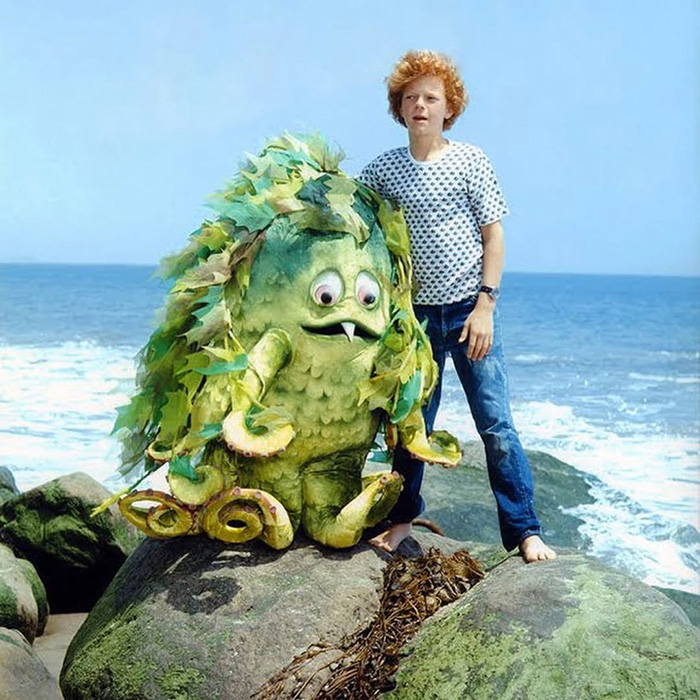
Billy Barty and Johnny Whitaker from Sigmund and the Sea Monsters
The Bugaloos and Sigmund and the Sea Monsters minimized the puppets; Donny & Marie reduced them to cameos (yes: Sid and Marty created that show). Then there was Dr. Shrinker, the sadly short-lived Far Out Space Nuts (featuring a prematurely gray Bob Denver), and the subject of many a child’s first vague stirrings, Electra Woman & Dyna Girl.
What is Sid Krofft without Sid Krofft puppets? A lot more than you might think.
I liked the costumed characters—I had a toy Freddie the Flute that was virtually unplayable—but I saved my love for the ones with more or less human faces. The Kroffts clearly knew that puppets were hard to upstage, so they relied on stage performers: Jack Wild (still fresh off the West End stage as Oliver!’s Artful Dodger); scrappy Billie Hayes, who won the role of Witchiepoo by leaping onto Marty Krofft’s desk and cackling; and Charles Nelson Reilly, whose inimitable sputtering and “hulllllll” laugh made him bigger than any cartoon.
But then there were also the stories. I don’t mean the writing: except for Land of the Lost, which had scripts by Larry Niven and D.C. Fontana, most of the dialogue on any given Krofft show was absolute dreck. Marty Krofft said he was against the laugh tracks, but I’m not sure how any child could have spotted the jokes without them.
But the stories—or I should say story, since they kept going back to the same well—was one that any child could identify with: the “stranger in a strange land” theme that gave Krofft shows their unexpected poignancy. The worlds they’ve landed in might be the kookiest or the kickiest, but Jimmy, Mark, and Sigmund just want to go home.
This is why I give David Gerrold less credit than he generally receives (or takes) for Land of the Lost. In his telling, the Kroffts showed him a scrapbook of pictures from various sci-fi movies and told him to come up with a story. But then there’s that unmistakable Krofft homesickness: Marshall, Will, and Holly just wishing their expedition had stayed routine.

Wesley Eure, Kathy Coleman, Phillip Paley and Spencer Milligan living in the Land of The Lost.
It’s strange for any show to invest so much cash and creative energy to create an attractive and alluring world, only to center it on a character who longs to leave that world. But I think there’s a reason why, and I believe the answer is Sid Krofft.
Maybe I should say Cyrus Yolas. That child disappeared the moment Sid Krofft became a professional puppeteer at the age of ten. By the time he was fifteen, he was billed as “Ringling Bros. youngest puppeteer.”
Sid loved talking about being the boy who literally ran away with the circus (he did say he was probably “too young” to be performing in burlesque), so it’s fair to say he bore few scars into adulthood. Even so: like so many young stars, it’s a life he traded for his childhood. He may have been enthralled to be so young and so beloved by cheering crowds when most kids his age were stuck writing book reports, surrounded by exotic animals and sequined performers, lit by candy-colored lights under the big top.
Or he might have been sick of the smell of elephant dung. He may have occasionally wanted to go home.
There’s another source for Sid’s grand theme, and he opened for her eight shows a week in Vegas. Just as young Cyrus Yolas became Sid Krofft, Frances Gumm disappeared into Judy Garland at a tender age. The Wizard of Oz—the film that captured her wounded heart, the one H.R. Pufnstuf was most often compared to—is also about a child who lands in a Technicolor wonderland and just wants to go home.
At every one of those Vegas shows that Krofft opened for, Judy would close by singing “Somewhere Over the Rainbow.” Don’t tell me that didn’t have an impact. You don’t base a dancing frog on someone you don’t love.
Unlike Dorothy, Sid’s kids never got home. The reason for that is prosaic: most Krofft shows were never renewed for a second season. It’s mind-blowing to consider that they only filmed seventeen episodes of H.R. Pufnstuf and Lidsville, and both series finales were clip shows.
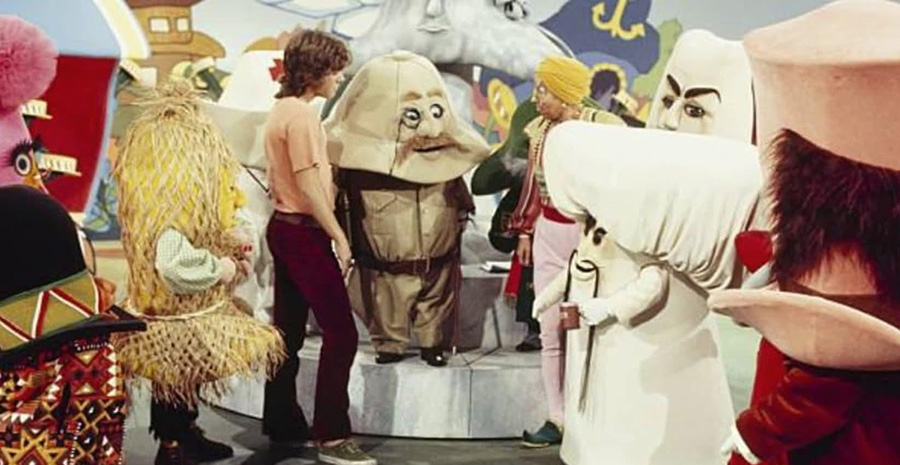
On Lidsville, Butch Patrick finds himself trapped in a land populated by living hat-people which is ruled by a crotchety magician
There is something unmistakably unfinished about Sid Krofft’s work, and I don’t just mean the cancellations. He only created as much of his worlds as he needed to. Backgrounds were sketched in and roughly painted. Many shots were recycled, and others look like they didn’t get a second take. The blocking largely consisted of actors moving in packs or colliding and knocking each other over. The pupils of Pufnstuf’s googly eyes tended to get stuck.
But there was one aspect of Sid Krofft’s world that was never incomplete: the absolute attention he gave to the look of his costumed characters. They weren’t huggable like Jim Henson’s Muppets. They had a far weirder magic. They were plush and unthreatening but their bizarreness was the whole point. Marty put it bluntly: “We screwed with every kid’s mind.”
Ever since Punch and Judy, puppets have excelled at terrifying the children they’re supposed to be entertaining.
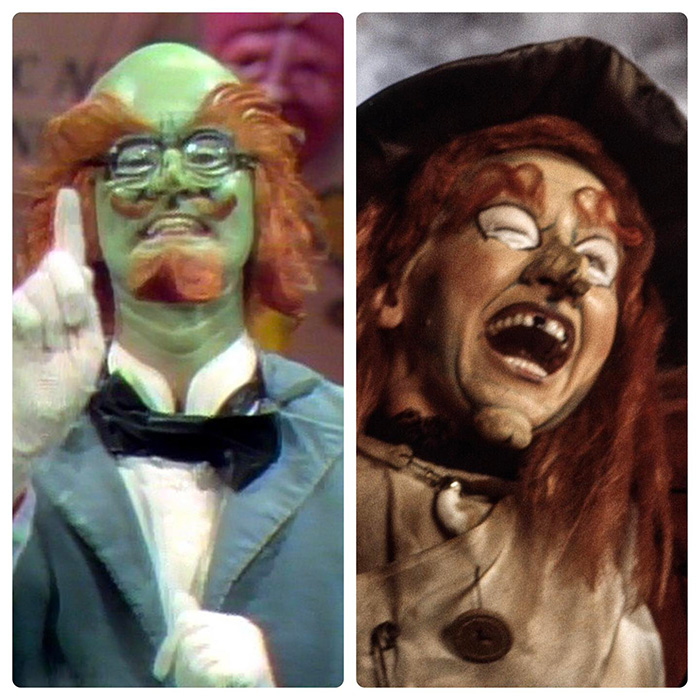
Charles Nelson Reilly as Hoodoo (Lidsville) and Billie Hayes as Witchiepoo (H.R. Pufnstuf)
While many adults have confessed to being scared by Witchiepoo and Hoodoo, I don’t know anyone who regrets it today. We liked watching them plot and we loved it when the plots were foiled. The villains were adults, most of the good guys were performed by little people, and the little guys always won.
That’s why we love Sid Krofft. He dreamed big. But he knew that the little guys should always win.