






























Universal Studios
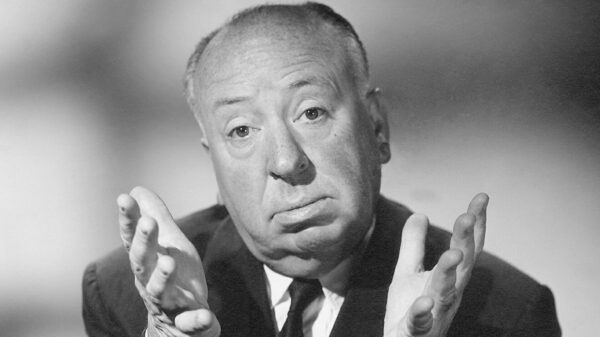
When Alfred Hitchcock Presents debuted on CBS on October 2, 1955, television was still figuring out what it wanted to be. For many people, it was basically radio with pictures—useful, disposable, and not to be taken too seriously. Then Alfred Hitchcock strolled in, already famous for films like Rear Window, Dial M for Murder, and Strangers on a Train, and quietly rewrote the rules.
What Hitchcock brought to television wasn’t just a famous name slapped on a series. He brought a worldview. A wicked sense of humor. A deep fascination with human weakness. And, most importantly, himself.
Over ten years—268 half-hour episodes and 93 hour-long installments under the later title The Alfred Hitchcock Hour—the series became one of the most influential shows in television history. It proved anthologies could thrive, helped legitimize TV as a serious storytelling medium, and introduced audiences to a darker, sharper idea of what television drama could be.
Hitchcock’s on-screen appearances were the glue that held the whole enterprise together. His silhouette, set to Charles Gounod’s “Funeral March of a Marionette,” became one of the most recognizable images in television history. Those introductions and epilogues—written by James B. Allardice—were little performances unto themselves, delivered with bone-dry timing and a mischievous glint. Hitchcock didn’t shout. He didn’t wink. He let the jokes land quietly, which somehow made them sharper.
He especially loved mocking his sponsors, to the point where separate versions of episodes had to be created: American broadcasts poked fun at commercials, while international versions turned the joke on Americans themselves. These segments transformed what could have been a standard mystery anthology into something personal. This wasn’t just a show Hitchcock hosted—it felt like a weekly invitation into his mind, where murder often sprang from petty grievances and morality was rarely clean.
The epilogues served a second purpose: satisfying the network censors. Standards and Practices insisted that criminals couldn’t get away with murder, so Hitchcock would reappear to explain—often with barely concealed amusement—how justice eventually caught up with them. These postscripts were transparently fake, and Hitchcock made sure we knew it. His delivery practically rolled its eyes, turning censorship into another running gag and reinforcing the show’s underlying belief that the real world is messier than television usually admits.
Although Hitchcock personally directed only seventeen of the half-hour episodes and one hour-long installment, his fingerprints were everywhere. He selected stories, approved scripts, oversaw casting, and enforced what became known as the “Hitchcockian” approach: ordinary people in extraordinary situations, psychological tension over gore, and twist endings that revealed character rather than existing purely for shock. Directors understood they weren’t there to put their own stamp on things—they were there to serve Hitchcock’s vision.
That vision attracted remarkable talent. Robert Stevens directed forty-four episodes and won an Emmy for “The Glass Eye.” Paul Henreid, Herschel Daugherty, and Norman Lloyd (who also served as associate producer alongside Joan Harrison) helped define the show’s look and rhythm. Future legends like Robert Altman, Ida Lupino, Stuart Rosenberg, Arthur Hiller, and William Friedkin all passed through, using the series as a proving ground for cinematic storytelling on the small screen.
Among Hitchcock’s own directed episodes, several remain landmarks. The premiere, “Revenge,” immediately announced the show’s moral ambiguity, ending on a bleak note that suggested violence could become cyclical and uncontrollable. “Breakdown” trapped Joseph Cotten inside his own paralyzed body, nearly burying him alive in one of television’s most harrowing silent performances. “The Case of Mr. Pelham” explored identity and doubles years before such themes became fashionable.
Then there’s “Lamb to the Slaughter,” still the show’s most famous episode. Barbara Bel Geddes plays Mary Maloney, a pregnant housewife who murders her husband with a frozen leg of lamb and calmly serves the evidence to the police. It’s dark, funny, and deeply unsettling, making viewers root for a murderer because her husband’s cruelty makes his death feel—uncomfortably—earned. Its enduring reputation isn’t nostalgia; it’s craft.
The anthology format demanded efficiency, and the series rose to the challenge. Performances had to land fast, with no time for indulgence. The guest list reads like a Hollywood roll call: Steve McQueen, Bette Davis, Claude Rains, Charles Bronson, Robert Redford, Joan Fontaine, Cloris Leachman, Peter Falk, Jessica Tandy, Roger Moore, Leslie Nielsen, Clint Eastwood, Burt Reynolds, William Shatner, Vincent Price, and countless others. Some were already stars; others were just getting started. All brought their A-game.
Because actors weren’t locked into recurring roles, they could take risks. Scripts—adapted from writers like Roald Dahl, Ray Bradbury, John Collier, and Cornell Woolrich—encouraged moral ambiguity and psychological depth. Television rarely gave actors material this rich, and they responded accordingly.
Certain episodes became legendary. “Man from the South” turned a cigarette lighter bet into a slow-burn nightmare. “Bang! You’re Dead!” mined unbearable suspense from a child unknowingly playing with a loaded gun. “The Jar” and “The Sorcerer’s Apprentice” pushed boundaries so far that networks panicked. Hitchcock never flinched. If anything, he seemed amused by how much discomfort television could generate without a single monster or special effect.
Alfred Hitchcock Presents arrived years before The Twilight Zone and helped make it possible. While Rod Serling leaned into science fiction and moral allegory, Hitchcock stayed grounded in human behavior. His monsters weren’t aliens or ghosts—they were spouses, neighbors, business partners. Sometimes they were us. Where The Twilight Zone often instructed, Hitchcock observed. Where Serling moralized, Hitchcock smirked.
That worldview is what makes the series endure. It refused comforting answers. It suggested justice might not come, and if it did, it might arrive offscreen and too late to matter. Evil wasn’t cosmic—it was domestic. Familiar. Inescapably human.
The show’s impact on television can’t be overstated. It helped legitimize TV as a serious artistic medium, proved anthologies could succeed commercially, and paved the way for decades of genre storytelling. Its influence is visible everywhere, from prestige drama to modern horror anthologies.
Today, the episodes still play late at night, still feel sharp, and still sting a little. Styles have changed, but jealousy, greed, fear, and desperation haven’t. Hitchcock understood that. He didn’t lecture about it—he entertained us while letting the implications sink in.
For ten years and 361 episodes, Alfred Hitchcock invited viewers to laugh, squirm, and occasionally recognize themselves in the worst people imaginable. The show’s legacy isn’t just in the series it inspired, but in how it expanded television’s ambitions, proving the small screen could handle big ideas, moral complexity, and genuine artistry—so long as it trusted its audience to keep up.
And Hitchcock always did.
Extras include two featurettes.



You must be logged in to post a comment Login