



































































Ketchup Entertainment
Not Without Hope is a film I’ve of two minds about: on the one hand, it’s a harrowing survival story, made all the more gut wrenching because it’s based upon true events.
It’s directed with skill by Joe Carnahan who seems to be revisiting at least some of the same themes that he explored in his very best film, The Grey.
It also contains a really strong central performance from Zachary Levi as Nick Schuyler.
It’s also monotonous (as is the nature of a film about survivors of a disaster at sea) and doesn’t really have the sense of closure or catharsis you’d want from a movie about life and death.
Not Without Hope is the story of four friends: Nick Schuyler (Zachary Levi), Will Bleakley (Marshall Cook), Marquis Cooper (Quentin Plair), and Corey Smith (Terrence Terrell) set out on a fishing trip in the Gulf of Mexico, but when their boat capsizes during a storm they are left stranded in open water.
There they struggle against dehydration, hypothermia, and exhaustion while awaiting rescue, as U.S. Coast Guard Captain Timothy Close (Josh Duhamel) coordinates an extensive search effort.
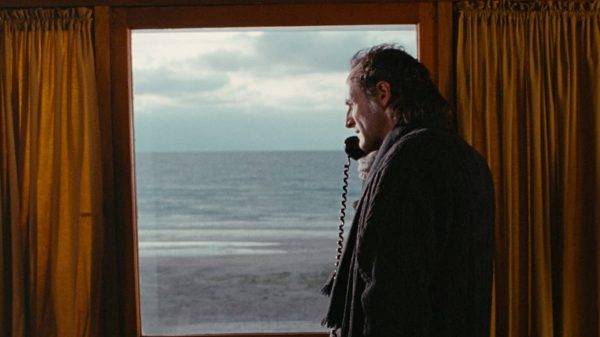
A plot summary doesn’t really do the nature of the central problem justice here: four men are stranded in a Gulf storm on the keel of a capsized fishing boat. Not Without Hope rivals Hitchcock’s Lifeboat for finding cinematic solutions to being in such a contained space. It also deserves kudos for sticking relatively close to the events as they happened and not trying to enforce a “Hollywood” style resolution upon them. The survivors don’t survive because they do anything, or figure out a way to get rescued– they’re simply picked up when the weather breaks enough to allow the Coast Guard another pass.
The flipside is that the reality Carnahan no doubt insisted on makes the film a tough watch in places.
He wants the audience to feel the agonizing helplessness and so the film, even at under two hours, drags because there’s really nothing the characters can do to push events forward. John Duhamel’s Captain Close and the families of the survivors are used to occasionally break up the monotony but it paradoxically doesn’t help because you know nothing’s going to change with the four guys on the boat in those scenes– so you’re just waiting to get back to them.
Zachary Levi delivers what has to be the performance of his career, as he embodies a man pushed to the absolute limits of human endurance. I primarily know Levi’s work in lighter roles and I was shocked by the physicality and vulnerability he brought to the true story role. His gradual personal disintegration under extreme circumstances becomes the film’s real anchor point.
Carnahan really tries to make the ordeal as visceral as possible, right down to letting his cameras take on water, but there’s just not a lot of forward progression.
This is a story of four men in an impossible situation who need to wait to be rescued. It’s a pretty interesting object lesson in what sorts of stories really work as films and why because this really needed something more to emotionally satisfy and even though the true story is harrowing and undoubtedly a tragedy it’s difficult to translate that emotion on screen when characters are forced into passivity.
It gets to the point where even the most sympathetic viewer begins to check his watch.
Not recommended.